Music ·
inMusic opens its gear to modders: MPC, Moog and 22 new products head to NAMM 2027 ready to hack
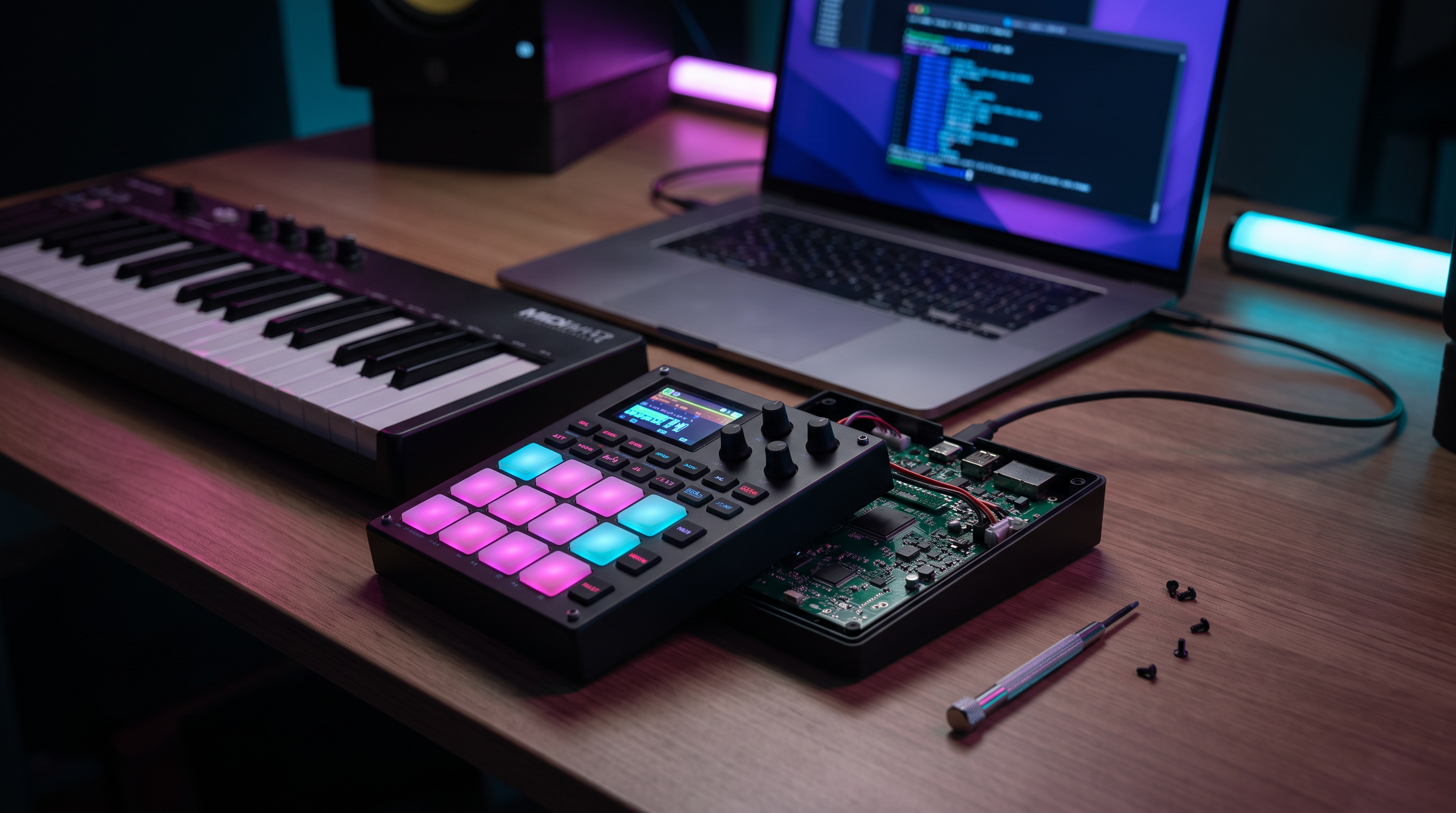
inMusic, the group that owns Akai Professional, Moog, Native Instruments, Denon DJ, Numark and Alesis, announced that it will bring 22 new products to NAMM 2027 and that "many" of them will be open for programmers and modders to get their hands on, with old-school hand-written code or with AI help. To show it off, it put together The Creator Lab, a space where anyone will be able to sit down with the new gear and with company engineers. In an industry where firmware is usually a black box, the maker of the MPC saying "go ahead, open it up" is no small thing: it changes what a producer can do with a device they already bought.
What inMusic announced
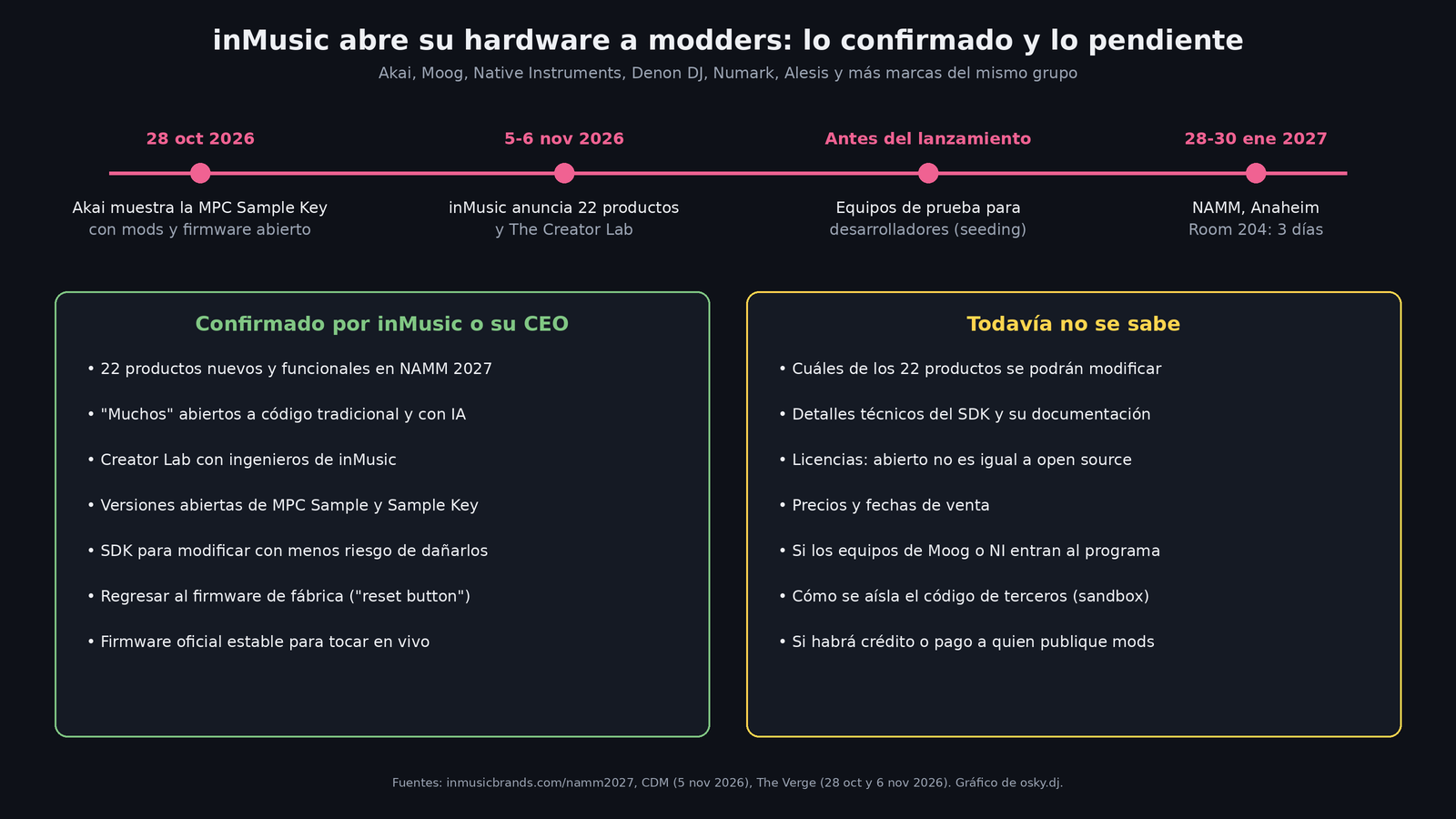
According to inMusic's official NAMM 2027 page, the company will be at Room 204 of the Anaheim Convention Center from January 28 to 30, 2027 with three things: 22 new "fully operational" products from its different brands, live presentations and panels, and The Creator Lab. The page describes the lab as a hands-on experience for musicians, developers, modders and "technically curious creators," where you'll be able to work alongside the inMusic development team and explore how software, customization and AI-assisted programming open up new possibilities. It also makes clear that you don't need to be a developer to come in.
In the press release, quoted by Synthtopia and by CDM, CEO Jack O'Donnell sums it up like this: "Openness doesn't require incompleteness," in other words, opening up a piece of gear doesn't mean selling it half-finished. His argument is that these are complete instruments that don't need modifying, but anyone who wants to take them somewhere else will be able to.
The MPC was the first clue
The announcement didn't come out of nowhere. On October 28, The Verge reported that Akai is preparing the MPC Sample Key, a 37-key version of the MPC Sample that hasn't been formally announced yet, and that it will have open firmware. Akai posted videos on Instagram of mods made with vibe coding that add synths to the unit, among them one from Native Instruments Massive, and even a fully custom operating system.
In a second interview with The Verge, O'Donnell explained that they're going to give the community "a toolbox" with the guts of devices like the MPC or the Sample: open source for some devices and an SDK to make modding easier and lower the risk of leaving your sampler as a paperweight. According to the same outlet, Akai has already started sending units to developers ahead of the Sample Key's launch. And on stability, he said he wants the official software to be "completely stable" for an artist on stage, with a kind of reset button so you can experiment without losing what you already have.
It's not just Akai
Peter Kirn, from CDM, talked with O'Donnell and adds several details:
- The openness doesn't stop at the MPC Sample: it will also include the more powerful MPCs in the lineup, which leaves room for custom instruments, effects and tools running alongside the factory ones.
- In the demos he saw, you could unlock a standalone MPC, SSH into it, turn on developer features and run plugins ranging from visuals to sound. Afterward you can go back to normal.
- Kirn warns that this doesn't necessarily mean open source hardware or firmware. On some devices it'll be more like Ableton's Extensions: third-party code runs in a separate environment. He bets that the industry's next buzzword will be sandboxing.
- Kirn still doesn't know which products make the list; he points out that Native Instruments and Moog joined the group recently.
Why it matters
Modding an MPC isn't new. CDM recalls JJOS, an unofficial 2006 firmware for the MPC1000 and MPC2500 that added features and fixed bugs without Akai's blessing. What's new is the manufacturer backing it with an SDK and a path back to the original firmware.
The clearest contrast is Elektron, which stopped allowing mods and hacks to be shared on its forums and, according to CDM, only lets you run the firmware it approves. inMusic is going in the opposite direction while also promising to keep releasing tested official updates.
My take
For anyone who produces or plays live with an MPC, this could mean the device stops aging at the pace of the manufacturer's priorities. A feature Akai will never prioritize, a weird effect for your set, or a visual integration for your videos could come from the community, or from you with a coding assistant, without risking your gear.
But you have to read the fine print once it exists, because right now it doesn't. We're missing product names, SDK documentation, licenses and prices. "Open" can mean anything, from published source code to a well-guarded sandbox where inMusic decides what you can touch. For a DJ or producer who just wants their gear to fire up at the gig, the promise that matters is the stable official firmware and the way back. For those who code, what matters is the SDK, and we'll see that in January.
Sources
- inMusic: NAMM 2027, 22 products and The Creator Lab (official page)
- CDM: Mods for everyone: inMusic is opening up MPC, more new gear to coders
- The Verge: How Akai and Moog are embracing vibe-coded mods
- The Verge: Akai is embracing vibe-coded mods with an open-source MPC
- Synthtopia: InMusic Creator Lab Bringing Open Platform 'Vibe Coding' To 2027 NAMM Show
- CDM: Elektron is halting sharing of mods and hacks on its forums